The Bombay Poetry Crawl

Collaborators
What & Why?
Preserving the legacy of Bombay poets
The Bombay Poetry Crawl (TBPC) is a dedicated archival research space focusing on Bombay poets who wrote about the city from 1947-1999 in various languages including Hindi, Marathi, English, Urdu, Gujarati, Tamil, and more. Our mission is to preserve and celebrate the rich literary heritage of Bombay through the works of these poets.
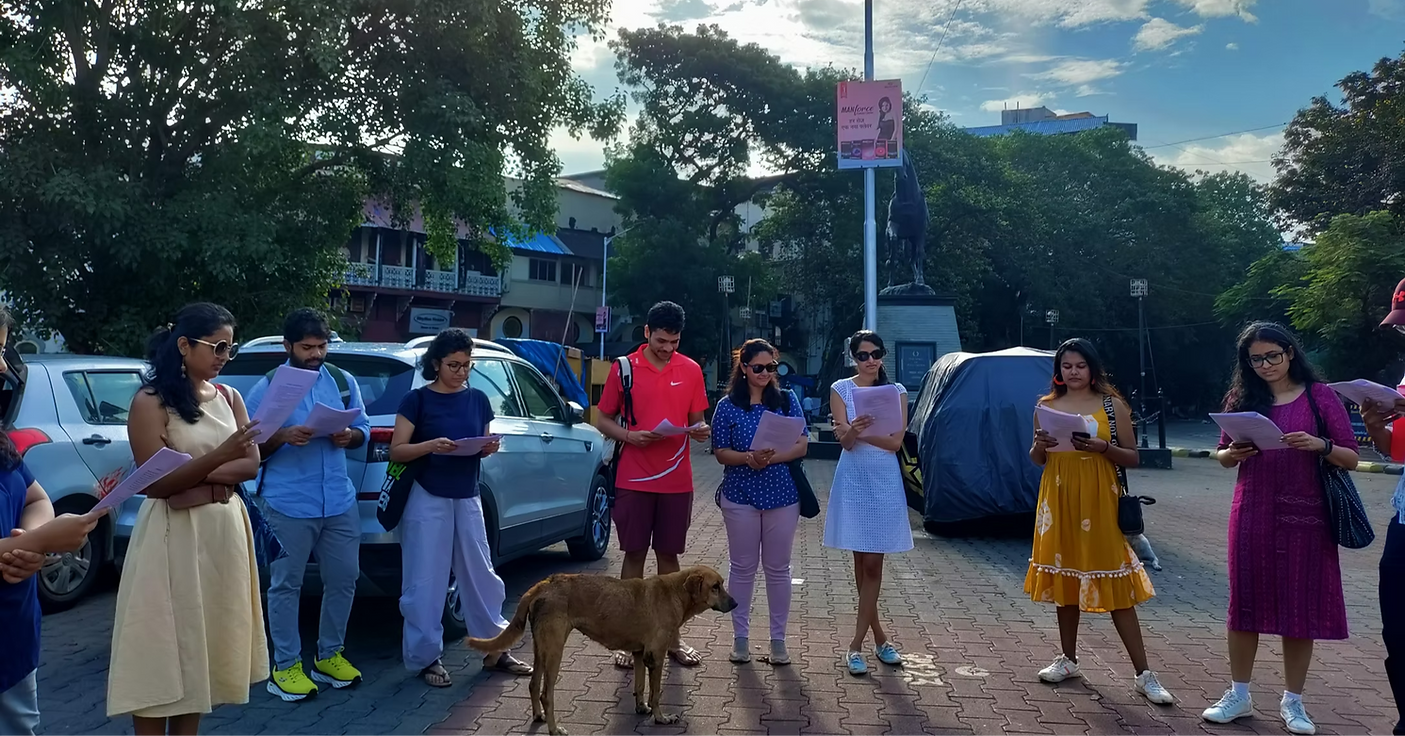
Exploring diverse linguistic and cultural narratives
TBPC offers seamless integration with different platforms, providing a unique opportunity to explore and experience the linguistic and cultural diversity of Bombay through the lens of poetry, offering a deeper understanding of the city's rich heritage.
Say Hello!
Reach out to us to explore the poetic world of Bombay, share your insights, or collaborate on projects dedicated to preserving and promoting the poetic legacy of the city.


![Shamim Tariq sahab met me in Byculla, an area in which he’s lived most of his bombay life. We drank chai and talked about his engagements with 1960s poetry in bombay through Mushairas, kavi sammelans, and artistic gatherings. He presented me with his seminal work, a book published by @sahityakademi titled MONASTICISM AND DEVOTION TO GOD: TASAWWUF AUR BHAKTI. An in-depth analysis of spirituality within Sufism and Vedanta’s principles, his book is a fantastic exploration of faith through unity and finding commonalities instead of differences. Isn’t that the most important kind of literature we need in this divisive political age?
Born in Varanasi in 1952, Shamim Tariq is an Indian scholar, columnist and served as the Director of the Karimi Library at Anjuman-E-Islam in Mumbai. In 2015, Tariq was awarded the Sahitya Akademic Urdu Prize for his book, Tasawwuf Aur Bhakti, a philosophical treatise that analyses Sufi principles and Vedanta ideology. In navigating both traditions, he explores the commonalities of peace, justice, compassion and brotherhood that are rife in the two. He is based in Mumbai.
[Urdu, Urdu poetry, poet, bombay poet, shayari, nazm, shamim tariq, Byculla, the bombay poetry crawl, Urdu poet]
#thebombaypoetrycrawl](https://scontent-den2-1.cdninstagram.com/v/t51.82787-15/747505310_18110643040999722_5895092229799817581_n.jpg?stp=dst-jpg_e35_tt6&_nc_cat=107&ccb=7-5&_nc_sid=18de74&efg=eyJlZmdfdGFnIjoiQ0FST1VTRUxfSVRFTS5iZXN0X2ltYWdlX3VybGdlbi5DMyJ9&_nc_ohc=MXk6DE0ATwsQ7kNvwETVJ6e&_nc_oc=AdrWFlF-jIlG1eNf1IaODVU86EdkxjNM5fSwoai06avsnmG8IMYp6IFdY8NGpsD3Qc8&_nc_zt=23&_nc_ht=scontent-den2-1.cdninstagram.com&edm=ANo9K5cEAAAA&_nc_gid=eSJBRLu_yF9Bq2Wyxmv4Yg&_nc_tpa=Q5bMBQGAW8vQoLc_ID8kXocMisSypUhqLzeED8h4O9rjNktinlNSvhM5BtNhOfd9QK-omzwBEYdcujW4&oh=00_AQDf2_UgMhpGX7lKGVRRZRstJVlImSMKrlX7JC1svva0_w&oe=6A64DB28)


![[Season 2 Episode 3] Dr Rakhshanda Jalil talks about how Progressive Writers Association meetings in Mumbai were frequented by women as well, and how these poets and writers created inviting spaces for women and men to debate, dissent and discuss together.
"This was a faily gender-just space" she says, talking about the communions that took place within literary circles in the 20th century.
You can listen to the full conversation with Dr Jalil by clicking the link in my bio and listening to the full interview — for free on YouTube, Spotify and my website!
@rakhshandajalil
#thebombaypoetrycrawl](https://scontent-den2-1.cdninstagram.com/v/t51.82787-15/735504622_18110032663999722_4154844476168367616_n.jpg?stp=dst-jpg_e35_tt6&_nc_cat=111&ccb=7-5&_nc_sid=18de74&efg=eyJlZmdfdGFnIjoiQ0xJUFMuYmVzdF9pbWFnZV91cmxnZW4uQzMifQ%3D%3D&_nc_ohc=mA-ruLpvxGQQ7kNvwG5C61B&_nc_oc=Adqo1j4l0X3hzN0bcpXdr8Vof5Fj5AMJCPNg0sd_DPrn8_lHLmOyx1s-Q3hqADhIEt0&_nc_zt=23&_nc_ht=scontent-den2-1.cdninstagram.com&edm=ANo9K5cEAAAA&_nc_gid=eSJBRLu_yF9Bq2Wyxmv4Yg&_nc_tpa=Q5bMBQF22AHOVaqj_uNSgFjv8fYjhrfs84sOe4nk4_ed36cBfXj3u-LzeX7gfg2ikixvCi6E84cOGdHZ&oh=00_AQDmME_MpAFW2U0byb5zfpWCOeOf04Y_IQdmaf0dxdOZ9w&oe=6A6500DA)